
"South Fujian coffee"
200 article(s) found

Chinese Coffee Culture throughout the Development History of Chinese Coffee Culture
When the banshee image of Starbucks is gradually known to the Chinese people, the Chinese coffee culture has gradually entered the lives of the Chinese people. Throughout the history of the development of Chinese coffee culture, we may be able to find the pace of coffee, the ancient Arab culture invading the birthplace of tea culture in the world. According to historical records, as early as 2000 BC, the Ajiao people in Ethiopia were already in the

Basic knowledge of fine coffee knowledge of small-grain coffee
Coffee (scientific name: Coffea arabica), also known as coffee tree, Arabica coffee, etc., is the national flower of Yemen. Before the 6th century in the park, Yemen was called Arab, so the coffee trees transported from them to other places were also called Arabian coffee trees. The name coffee comes from the Arabic Qahwah, which means plant drink. Later, the coffee spread all over the world, and it was picked.

Which brand of Brazilian coffee beans is good? Brazilian coffee brand export mode Brazilian coffee pilao?
Professional coffee knowledge exchange more coffee bean information please follow the coffee workshop (Wechat official account cafe_style) first of all, there are two main kinds of coffee beans in Brazil, Arabica arbica and Robusta robusta. 1. Arabica species (caf arbica) Arabica species, that is, small seed species. The country of origin is the Ethiopian plateau, and coffee was used for a long time before the 15th century.

Do you know the types and distribution of coffee beans? what are the kinds of sour coffee beans?
Professional coffee knowledge exchange more coffee bean information please follow the coffee workshop (Wechat official account cafe_style) caffeine is native to Africa and has many varieties. Each variety is related to specific climatic conditions and a certain altitude. The wild coffee tree is an evergreen shrub, 3 to 3.5 meters high, with small white flowers on its branches and a jasmine fragrance. The fruit is 1.5 to 1.8 cm long.
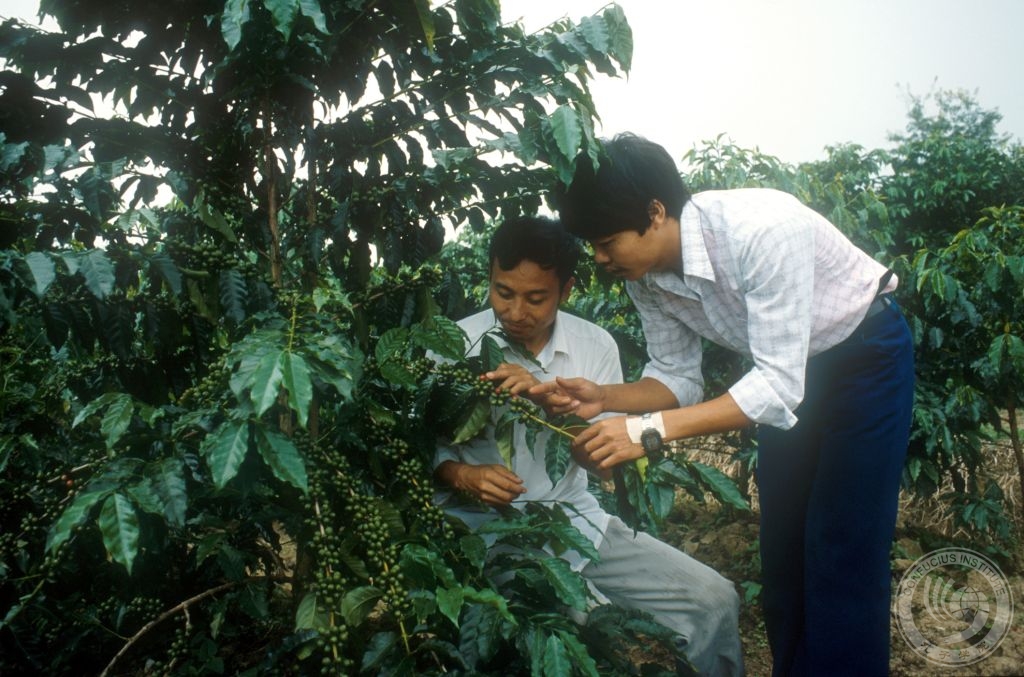
Coffee Culture | Coffee Development in China and Japan
For the exchange of professional baristas, please follow the interior view of the coffee shop (Wechat official account cafe_style) in the East side of Beijing in 1994. Coffee was first recorded in Chinese history books when the first coffee tree was planted in Taiwan in 1884. In the tenth year of Guang Xu of the Qing Dynasty (AD 1884), an English tea merchant found that the climate of Taiwan was very similar to that of South America, so it should be a good place to grow coffee. In

Frequently asked questions and answers to Coffee and Cocoa
Cocoa coffee fancy coffee cocoa coffee Caf Cacao (Eastern European countries) deep-grown coffee 150cc Cocoa liqueur 15cc stir cream 20cc cup pour coffee and cocoa liqueur, then float over the stirred cream. Cocoa liqueur is the most suitable liqueur for coffee, and coffee plus cocoa is the most common way to quote it in Europe. This kind of coffee can be either hot or hot.

A comparison between Chinese Coffee Culture and Foreign Coffee Culture
The word "coffee" in Chinese coffee culture comes from the Greek word Kaweh, meaning strength and enthusiasm. Coffee tree is an evergreen shrub of Capsaceae. Daily coffee is made from coffee beans combined with a variety of cooking utensils, and coffee beans refer to the nuts in the fruit of the coffee tree, which are then roasted with appropriate roasting methods. In China, people like drinking coffee more and more. With

The list of the top ten tea brands in the world, which brand of tea is the best to drink tea? the historical evolution process.
Green tea the first real tea is well known. Tea is produced from tea trees (Camellia sinensis, Tea). Green tea, black tea, white tea and oolong tea are produced from here. The difference between each kind of tea is made in the factory. There, the leaves are treated in a unique way. According to legend, their history can be traced back to more than 5000 years ago, when Shennong in ancient China discovered

A new choice for the boss of instant coffee.
The beverage industry is facing a reshuffle period, carbonated drinks, water, fruit juices and other major categories are also experiencing unprecedented challenges, its market is gradually becoming saturated. However, the annual growth rate of China's coffee market has reached 15% Mur20%, with a good momentum of development. Ready-to-drink coffee, a category of coffee consumption with a compound growth rate of 34.2%. The scale of coffee consumption market in China is about to exceed 1500.

Is it okay to grow coffee in the north? are there any coffee trees adapted to the north? can coffee be grown in a greenhouse?
Professional coffee knowledge exchange more information about coffee beans Please follow the coffee workshop (official Wechat account cafe_style) Miss Fan, who was looking for beans in America a few days ago, shared photos of palm trees and big beaked bird estates. This is one of them. From a planting point of view, we call it compost, which means to put some unwanted biological waste in the manor, including coffee peel, waste branches, leaves.

From fashionable iced coffee to elegant dining! 4 new ways to taste oolong!
Communication of professional baristas Please follow the coffee workshop (official Wechat account cafe_style) for fifth and sixth graders, the yellowish brown tea with charcoal scent and a hint of bitterness may be the earliest tea memory in life. It was a popular feature of frozen-top oolong tea in the 1970s, when life was inseparable from making tea, and many people spent their childhood in the fragrance of tea. Has 2 stores in Taipei and distributes

Coffee knowledge Fine Coffee basic knowledge
Coffee (scientific name: Coffea arabica), also known as coffee tree, Arabica coffee, etc., is the national flower of Yemen. Before the 6th century in the park, Yemen was called Arab, so the coffee trees transported from them to other places were also called Arabian coffee trees. The name coffee comes from the Arabic Qahwah, which means plant drink. Later, the coffee spread all over the world, and it was picked.

Basic knowledge of boutique coffee
Coffee (scientific name: Coffea arabica), also known as coffee tree, Arabica coffee, etc., is the national flower of Yemen. Before the 6th century in the park, Yemen was called Arab, so the coffee trees transported from them to other places were also called Arabian coffee trees. The name coffee comes from the Arabic Qahwah, which means plant drink. Later, the coffee spread all over the world, and it was picked.

White Coffee History Source--The difference between white coffee and black coffee Malaysia's best white coffee is
Today we are going to discuss the historical origin of white coffee and the difference between white coffee and black coffee in Malaysia. I believe that people who like coffee know what white coffee is, old street white coffee, I believe everyone is familiar with it! The founder of Malaysian coffee culture, the Chinese have also become one of the main consumer groups of white coffee. Coffee over the years.

Basic knowledge of boutique coffee
Coffee (scientific name: Coffea arabica), also known as coffee tree, Arabica coffee, etc., is the national flower of Yemen. Before the 6th century in the park, Yemen was called Arab, so the coffee trees transported from them to other places were also called Arabian coffee trees. The name coffee comes from the Arabic Qahwah, which means plant drink. Later, the coffee spread all over the world, and it was picked.

Coffee growers in Yunnan are in trouble? Is Yunnan small seed coffee good?
Coffee growers in Yunnan are in trouble? Is Yunnan small seed coffee good? The western and southern parts of Yunnan Province are located between latitude 15 and Tropic of Cancer. Most areas are 1000-2000 meters above sea level. The topography is dominated by mountains and slopes, with large undulation, fertile soil, sufficient sunshine, rich rainfall and large temperature difference between day and night. These unique natural conditions have formed the taste of Yunnan small-grain coffee.

Coffee knowledge is an evergreen shrub of Rubiaceae.
Coffee (scientific name: Coffea arabica), also known as coffee tree, Arabica coffee, etc., is the national flower of Yemen. Before the 6th century in the park, Yemen was called Arab, so the coffee trees transported from them to other places were also called Arabian coffee trees. The name coffee comes from the Arabic Qahwah, which means plant drink. Later, the coffee spread all over the world, and it was picked.

The 11 most secret cafes in Shanghai, petty-bourgeois coffee, high-style romantic coffee, big coffee hobby.
Secret coffee base of GABEE blossom champion Lim Dong-Won 's coffee base address: 1 / F, 387 Bansong Garden Road, Huangpu District-2 per capita: 35 yuan the caf é of Taiwan bouquet champion Lim Dong-Won has finally arrived in Shanghai! At present, there are only Taiwan and Shanghai in the world. If you want to run into Mr. Lin, please start as soon as possible! The shop name GABEE means coffee in Taiwanese, followed by coffee. Then

Coffee with you has entered a dead move. Most consumers are still in the dark that led to the decline of coffee with you.
Although coffee has made a dead move with you, many consumers are still in the dark. A reporter from the Beijing Business Daily recently received a complaint from a consumer Xia Jun (a pseudonym) that the coffee near Zhenhua Mall on Jinan Road in Dongying City, Shandong Province, was closed with you, while the stored value card she issued only last December was facing scrapping. In fact, since May last year, coffee has broken your capital chain, your headquarters has been evacuated, and your boss has run away.
A preliminary study on the Origin, Development, spread and Beverage Culture of Coffee
Coffee, tea and cocoa are the three major beverages in the world, which are consumed by about LM people all over the world, and their consumption is second only to drinking coffee in Europe and the United States. Coffee consumption is also becoming more and more popular in China and other eastern countries. However, in Chinese academic circles, there are no papers and monographs on coffee from the perspective of agricultural history and custom history.